 Sondre Guttormsen

Use Aomi or a guided session to practice what you are reading.

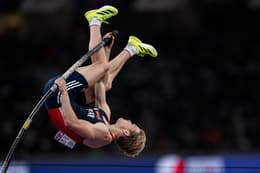
At the 2024 Paris Olympics, I was one of thousands of athletes competing at the highest level in sport. But here's something that rarely makes the broadcast: nearly every athlete at that level works systematically on their mental game. Visualization sessions before events. Breathing protocols on the warm-up track. Structured cognitive routines to manage arousal and attentional focus. Mental performance training isn't a luxury at the elite level — it's standard practice, embedded into periodized training plans alongside physical conditioning.
The question isn't whether mental training works. Decades of peer-reviewed research have established that conclusively. The question is why the other 99% of athletes who would benefit from it still don't have access.
Defining Mental Performance Training
Mental performance training is not clinical care. It is a performance discipline — analogous to strength and conditioning, but targeting the cognitive, emotional, and attentional processes that underpin skilled execution.
The field draws on several established subdisciplines:
Visualization and motor imagery. The structured mental rehearsal of skills, sequences, and competitive scenarios. Functional neuroimaging studies demonstrate that motor imagery activates the premotor cortex, supplementary motor area, and cerebellum — the same neural substrates involved in physical execution (Jeannerod, 1994; Decety & Grèzes, 1999). The PETTLEP model (Holmes & Collins, 2001) provides a validated framework for structuring imagery to maximize functional equivalence with physical performance.
Arousal regulation. Techniques for managing physiological activation — reducing over-arousal (e.g., pre-competition anxiety) or increasing under-arousal (e.g., flat performances in training). The Inverted-U hypothesis (Yerkes & Dodson, 1908) and its successor, the Individual Zones of Optimal Functioning model (Hanin, 2000), establish that performance is maximized within an individually-determined arousal band, and that both excessive and insufficient arousal degrade execution.
Attentional focus. Training the capacity to direct attention to task-relevant stimuli while inhibiting distractors. Nideffer's (1976) model of attentional styles distinguishes between broad/narrow and internal/external focus dimensions, each suited to different sport demands. In tennis, this means ball-tracking over scoreboard-checking. In distance running, it means managing effort perception rather than fixating on splits.
Self-talk. The deliberate use of internal dialogue to guide behavior. A meta-analysis by Hatzigeorgiadis et al. (2011), synthesizing 32 studies (n = 962), found that both instructional self-talk ("drive through the ball") and motivational self-talk ("I can do this") improve performance — with instructional self-talk showing larger effects for precision tasks (d = 0.67) and motivational self-talk for strength and endurance tasks (d = 0.37).
Goal setting. Not the vague aspiration of "I want to win," but the structured decomposition of objectives into process goals (controllable behaviors), performance goals (personal benchmarks), and outcome goals (competitive results). Locke and Latham's (2002) goal-setting theory, validated across hundreds of studies, demonstrates that specific, difficult goals lead to higher performance than vague or easy goals.
Pre-performance routines. Consistent behavioral sequences that serve as conditioned cues for motor execution. Cotterill's (2010) review found that routines reduce decision fatigue, stabilize attentional focus, and provide a sense of control — particularly in self-paced sports like golf, gymnastics, and field events.
The Access Problem: Who Actually Gets This Training
Here's the structural reality: a qualified mental performance coach in the United States charges $150–$300 per session. Board certification through the Association for Applied Sport Psychology (AASP) requires a master's degree, 400+ hours of supervised practice, and ongoing professional development. There are approximately 2,500 Certified Mental Performance Consultants (CMPCs) in the U.S. (AASP, 2024).
Compare that demand side:
- Approximately 520,000 NCAA student-athletes across Divisions I, II, and III (NCAA, 2024)
- Roughly 8 million high school athletes (NFHS, 2023)
- An estimated 60+ million adults who participate in competitive recreational sport (running, cycling, CrossFit, martial arts, club team sports)
Even accounting for institutional mental performance training departments at Power Five universities and national training centers, the coverage is sparse. A 2019 NCAA survey found that only 52% of Division I schools had a dedicated mental performance professional, and that number dropped below 20% for Division II and III institutions (Sudano & Miles, 2017).
The athletes who need mental performance training most — those dealing with competition anxiety for the first time, recovering from injury, navigating a performance plateau, or transitioning to a higher level of competition — are disproportionately underserved.
What Changes With Technology
This is why I built Athlete Mindset. Not because AI replaces a human mental performance coach — it does not, and I want to be explicit about that distinction. But because AI can deliver the foundational tools of mental performance training to athletes who would otherwise never encounter them.
Personalized Imagery at Scale
A human consultant creates visualization scripts through intake conversations, sport analysis, and iterative refinement. The process is effective but time-intensive and cost-prohibitive for regular updates.
An AI system can generate sport-specific, context-aware imagery scripts in minutes. It incorporates the athlete's sport, position, skill level, upcoming competition details, and personal goals. It can produce a new session for each training day — something that would be financially impractical with human-only delivery. Critically, the AI generates imagery based on the PETTLEP framework (Holmes & Collins, 2001), ensuring structural validity rather than generic "positive thinking" prompts.
Availability That Matches Athletic Schedules
Competition anxiety does not follow business hours. The athlete who cannot sleep before a state championship needs a guided breathing protocol at 11 PM, not an appointment slot next Tuesday. The college athlete managing pre-competition nerves at an away tournament needs access on the team bus, not in a campus office 200 miles away.
AI-powered coaching is available 24/7 — before morning competitions, during tournament lunch breaks, and during the critical final hours before major events.
Enabling Consistent Practice
The dose-response relationship in mental skills training is well-established: benefits scale with practice frequency and consistency (Weinberg & Gould, 2019). A single pre-competition visualization session provides marginal benefit. Regular practice — three to five sessions per week — produces cumulative neural adaptation, improved self-regulation, and more automatic execution under pressure.
But maintaining a weekly relationship with a mental performance coach costs $600–$1,200 per month. An AI system makes daily practice economically feasible, allowing athletes to build mental training habits with the same consistency they apply to physical conditioning.
Reducing Barriers to Entry
Despite meaningful progress in destigmatizing mental health in sport, many athletes — particularly male athletes, adolescents, and those in team-sport cultures — avoid seeking mental performance support due to perceived stigma or social cost (Steinfeldt & Steinfeldt, 2012). A private, on-demand AI coach eliminates that barrier entirely. No scheduling, no waiting rooms, no disclosure to coaches or teammates.
Limitations and Ethical Boundaries
I want to be transparent about what AI-based mental training cannot do:
AI is not a licensed clinician. If an athlete is experiencing clinical anxiety, depression, disordered eating, or other mental health conditions, they need a qualified mental health professional — a licensed mental health professional with sport-specific training. AI mental performance tools are designed for performance enhancement within the normal range, not clinical intervention.
AI does not replicate a human coaching relationship. The relationship between an athlete and a trusted human consultant provides rapport, empathy, and contextual judgment that technology cannot fully replicate. The ideal model is complementary: AI for consistent daily practice and foundational skill-building, human expertise for complex issues, crisis support, and deeper developmental work.
AI must be evidence-based to be credible. The wellness technology market is saturated with apps offering generic meditation, affirmation generators, and motivational content with no grounding in mental performance training research. For AI-delivered mental training to be effective, it must be built on validated frameworks — PETTLEP for imagery, the Individual Zones of Optimal Functioning for arousal regulation, Nideffer's model for attentional training, and established breathwork protocols with physiological evidence.
The Inflection Point
I believe we're at an inflection point in sport. The science of mental performance training is mature — decades of controlled research across diverse populations and competitive contexts. The technology to deliver evidence-based mental training at scale is now available. The athletes who integrate systematic mental training at the high school, college, and recreational competitive level will compound that advantage over years of development.
Mental training isn't about being mentally "weak." It's about recognizing that the brain is a trainable system — subject to the same principles of progressive overload, specificity, and recovery that govern physical adaptation. And just as no serious athlete would skip the weight room and hope their muscles grow on their own, no serious athlete should leave their mental game to chance.
Sondre Guttormsen is a two-time Olympian (Tokyo 2020, Paris 2024), Norwegian pole vault record holder (6.06m indoor), 3x NCAA Champion, and Princeton psychology graduate. He founded Athlete Mindset to make evidence-based mental training accessible to every athlete.
References
- Cotterill, S. T. (2010). Pre-performance routines in sport: Current understanding and future directions. International Review of Sport and Exercise Psychology, 3(2), 132–153.
- Decety, J., & Grèzes, J. (1999). Neural mechanisms subserving the perception of human actions. Trends in Cognitive Sciences, 3(5), 172–178.
- Driskell, J. E., Copper, C., & Moran, A. (1994). Does mental practice enhance performance? Journal of Applied Psychology, 79(4), 481–492.
- Hanin, Y. L. (2000). Individual zones of optimal functioning (IZOF) model. In Y. L. Hanin (Ed.), Emotions in Sport (pp. 65–89). Human Kinetics.
- Hatzigeorgiadis, A., Zourbanos, N., Galanis, E., & Theodorakis, Y. (2011). Self-talk and sports performance: A meta-analysis. Perspectives on Psychological Science, 6(4), 348–356.
- Holmes, P. S., & Collins, D. J. (2001). The PETTLEP approach to motor imagery: A functional equivalence model for sport psychologists. Journal of Applied Sport Psychology, 13(1), 60–83.
- Jeannerod, M. (1994). The representing brain: Neural correlates of motor intention and imagery. Behavioral and Brain Sciences, 17(2), 187–202.
- Locke, E. A., & Latham, G. P. (2002). Building a practically useful theory of goal setting and task motivation. American Psychologist, 57(9), 705–717.
- Nideffer, R. M. (1976). Test of attentional and interpersonal style. Journal of Personality and Social Psychology, 34(3), 394–404.
- Steinfeldt, J. A., & Steinfeldt, M. C. (2012). Profile of masculine norms and help-seeking stigma in college football. Sport, Exercise, and Performance Psychology, 1(1), 58–71.
- Sudano, L. E., & Miles, C. M. (2017). Mental health services in NCAA Division I athletics: A survey of head ATCs. The Physician and Sportsmedicine, 45(2), 154–160.
- Vealey, R. S., & Greenleaf, C. A. (2001). Seeing is believing: Understanding and using imagery in sport. In J. M. Williams (Ed.), Applied Sport Psychology (pp. 247–283). Mayfield.
- Weinberg, R. S., & Gould, D. (2019). Foundations of Sport and Exercise Psychology (7th ed.). Human Kinetics.
- Yerkes, R. M., & Dodson, J. D. (1908). The relation of strength of stimulus to rapidity of habit-formation. Journal of Comparative Neurology and Psychology, 18(5), 459–482.
One useful idea. One repeatable rep.
Build a mental routine you can return to when the moment gets loud.