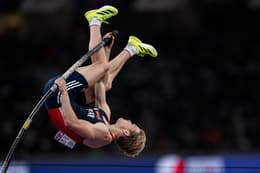
 Sondre Guttormsen


Use Aomi or a guided session to practice what you are reading.

If you've spent any time around mental performance training, you've heard the instruction: "Visualize your success." But that advice — well-intentioned as it is — obscures a critical distinction. Most athletes who attempt visualization do it poorly, not because they lack the cognitive ability, but because they lack a structured framework for producing imagery that is functionally equivalent to physical execution.
PETTLEP is the framework that solves this problem. Developed by Holmes and Collins (2001) and published in the Journal of Applied Sport Psychology, it is the most empirically validated approach to motor imagery in the mental performance training literature. The model is grounded in a key insight from neuroscience: mental imagery activates the same sensorimotor brain regions as physical performance — but only when the imagery matches specific criteria of fidelity and structure.
Theoretical Foundation: The Functional Equivalence Hypothesis
PETTLEP is built on the functional equivalence hypothesis, which holds that motor imagery and motor execution share neural substrates to the degree that the imagery replicates the conditions of actual performance (Jeannerod, 1994; Decety & Grèzes, 1999).
Neuroimaging studies using fMRI and PET have consistently demonstrated that imagined movements activate the premotor cortex, supplementary motor area (SMA), basal ganglia, and cerebellum — the same structures involved in movement planning and coordination (Lotze & Halsband, 2006). However, the strength of this neural overlap depends on the quality of the imagery. Vague, outcome-focused imagery ("I win the race") produces minimal motor system activation. Detailed, kinesthetically rich, temporally accurate imagery produces activation patterns that closely mirror physical execution.
Each element of the PETTLEP acronym addresses a specific dimension of functional equivalence.
The Seven Elements of PETTLEP
P — Physical
The athlete's body should adopt a posture congruent with the task being imagined. If you are a basketball player visualizing free throws, stand up. Hold your hands as if gripping the ball. If you are a swimmer, sit at the edge of a bench as if you are on the starting block.
The rationale is neurophysiological: Jeannerod (1994) demonstrated that imagining a movement while in a physically congruent posture produces stronger corticospinal excitability than imagining it in a relaxed supine position. EMG studies confirm that muscles relevant to the imagined task show increased electrical activity during imagery — a phenomenon called subliminal motor activation — and this effect is amplified when the body is positioned appropriately (Guillot et al., 2007).
E — Environment
Visualization should incorporate environmental cues from the actual performance context — or the closest available approximation. If the athlete cannot be at the competition venue, photographs, video, or audio recordings from the site can serve as environmental anchors. The more multimodal environmental information the brain can access during imagery, the stronger the encoding overlap with the eventual performance.
Lang's (1979) bio-informational theory provides the theoretical basis: motor imagery is stored as propositional networks that include stimulus propositions (the environment), response propositions (the body's actions), and meaning propositions (the interpretation). Activating all three categories during imagery produces stronger physiological responses than activating only one.
T — Task
The imagery must specify the exact motor task, not a general sense of competence. A pole vaulter should visualize each discrete phase: the approach run, the plant, the takeoff, the swing-up, the extension, the clearance, the landing. A tennis player should mentally execute the specific serve motion — ball toss, racket drop, pronation, follow-through — not simply imagine "serving well."
This specificity is critical because the motor cortex is somatotopically organized. Activating the correct neural maps requires task-specific imagery, not generic athletic ideation.
T — Timing
Imagery should be performed at real-time speed. If the competition performance takes 48 seconds, the visualization should take approximately 48 seconds. Slow-motion imagery has pedagogical value for learning new skills (allowing detailed attention to component movements), but for performance preparation, real-time imagery more accurately primes the motor system's timing circuits — particularly the cerebellum, which calibrates temporal coordination of multi-joint movements (Ivry & Spencer, 2004).
L — Learning
The content of imagery must evolve as the athlete's skills develop. The visualization script used six months ago should not be the same as today's — if the athlete has refined technique, changed strategy, or improved fitness, the imagery must update accordingly. Static imagery creates a representational mismatch between the mental model and the athlete's current motor capability, which Holmes and Collins (2001) identified as a common source of imagery inefficacy.
E — Emotion
This is the element most frequently omitted by athletes — and it is arguably the most consequential. Effective imagery should incorporate the emotional states expected during competition: the pre-start anticipatory arousal, the concentration during execution, the satisfaction of technical precision.
The neurological basis is the limbic system's role in memory consolidation and motor preparation. The amygdala modulates long-term potentiation in motor memory circuits (McGaugh, 2004), meaning that emotionally charged imagery produces stronger and more durable motor traces than emotionally flat imagery. Athletes who visualize in a detached, analytical mode miss the limbic contribution entirely.
P — Perspective
Two imagery perspectives exist: internal (first-person, seeing through your own eyes) and external (third-person, watching yourself as on video). The research generally favors internal perspective for motor performance tasks, as it more closely replicates the perceptual experience of actual execution and produces stronger kinesthetic sensations (Hardy & Callow, 1999).
However, external imagery has demonstrated utility for tasks requiring spatial awareness or form correction — such as gymnastics, diving, or figure skating, where the athlete benefits from "seeing" their body position. The recommendation is not to use one perspective exclusively, but to default to internal for motor preparation and use external selectively for form refinement.
Empirical Evidence for PETTLEP
The PETTLEP model has been tested across multiple controlled studies with consistent results:
Smith et al. (2007) conducted two experiments comparing PETTLEP-based imagery to "traditional" visualization (relaxation-based, supine imagery) and physical practice. In Experiment 1, participants performed a gymnastics task. The PETTLEP group improved by a significantly greater margin than the traditional imagery group, and the improvement was not statistically different from the physical practice group. In Experiment 2, using a hockey penalty flick task, similar results were obtained — PETTLEP imagery produced improvements comparable to physical practice.
Wakefield and Smith (2012) applied PETTLEP imagery to a bicep curl strength task over a six-week intervention. The PETTLEP group showed a statistically significant increase in maximum bicep curl weight — an effect previously thought to require physical loading. The authors attributed this to corticospinal adaptation: imagery-induced motor neuron recruitment produced measurable strength gains.
Wright and Smith (2009) found that PETTLEP-based imagery improved performance on a dart-throwing task, with effects persisting at a 1-week follow-up — suggesting durable motor learning rather than transient priming.
The Driskell et al. (1994) meta-analysis, synthesizing 35 studies across multiple domains, reported a mean effect size of d = 0.527 for mental practice, equivalent to approximately 23% improvement when added to physical training. Critically, the meta-analysis found that effect sizes were moderated by imagery quality — structured, vivid imagery produced substantially larger effects than vague or unstructured imagery.
How to Implement PETTLEP in Training
You do not need to be an elite athlete to benefit from PETTLEP-based visualization. Here is a practical implementation protocol:
- Select one specific skill or performance scenario. A golf approach shot, a penalty kick, a vault dismount, a 400m race plan. Specificity is essential.
- Assume a physically congruent posture. Stand, sit, or position your body as close to the performance position as possible.
- Integrate environmental cues. If at the venue, scan and absorb the surroundings. If elsewhere, use photos, video, or audio recordings of the competition environment.
- Execute the imagery in real time. Walk through the skill at the speed it actually takes, engaging all relevant senses — visual, auditory, kinesthetic, tactile.
- Include emotional content. Feel the competitive pressure, the concentration, the confidence. Do not suppress arousal — channel it.
- Practice 5–10 minutes, 3–5 times per week. The dose-response curve is well-established: consistent moderate practice outperforms infrequent intensive sessions (Weinberg & Gould, 2019).
The more consistently you practice structured imagery, the more your brain treats it as genuine motor experience. Over time, athletes report improved confidence, reduced pre-competition anxiety, and more automatic execution under competitive pressure — consistent with the neural adaptation literature (Pascual-Leone et al., 1995).
PETTLEP and AI-Delivered Mental Training
One of the persistent barriers to PETTLEP adoption has been the resource cost of creating personalized, sport-specific imagery scripts. A mental performance coach must understand the athlete's sport, competitive context, technical level, and performance profile to design an effective script — a process requiring significant expertise and time.
At Athlete Mindset, we built an AI system that generates PETTLEP-based visualization sessions personalized to the athlete's sport, position, skill level, and upcoming competitive schedule. The system produces detailed, step-by-step audio scripts that guide the athlete through each phase of the performance — incorporating physical cues, environmental details, real-time pacing, emotional engagement, and perspective cues that the PETTLEP model requires.
This is not a replacement for working with a qualified mental performance coach. It is a tool for making consistent daily practice of structured visualization economically and logistically feasible — which is what the research identifies as the primary determinant of imagery effectiveness.
Sondre Guttormsen is a two-time Olympian (Tokyo 2020, Paris 2024), Norwegian pole vault record holder (6.06m indoor), 3x NCAA Champion, and Princeton psychology graduate. He founded Athlete Mindset to make mental performance training accessible to every athlete.
References
- Decety, J., & Grèzes, J. (1999). Neural mechanisms subserving the perception of human actions. Trends in Cognitive Sciences, 3(5), 172–178.
- Driskell, J. E., Copper, C., & Moran, A. (1994). Does mental practice enhance performance? Journal of Applied Psychology, 79(4), 481–492.
- Guillot, A., Lebon, F., Rouffet, D., Champely, S., Doyon, J., & Collet, C. (2007). Muscular responses during motor imagery as a function of muscle contraction types. International Journal of Psychophysiology, 66(1), 18–27.
- Hardy, L., & Callow, N. (1999). Efficacy of external and internal visual imagery perspectives for the enhancement of performance on tasks in which form is important. Journal of Sport and Exercise Psychology, 21(2), 95–112.
- Holmes, P. S., & Collins, D. J. (2001). The PETTLEP approach to motor imagery: A functional equivalence model for sport psychologists. Journal of Applied Sport Psychology, 13(1), 60–83.
- Ivry, R. B., & Spencer, R. M. C. (2004). The neural representation of time. Current Opinion in Neurobiology, 14(2), 225–232.
- Jeannerod, M. (1994). The representing brain: Neural correlates of motor intention and imagery. Behavioral and Brain Sciences, 17(2), 187–202.
- Lang, P. J. (1979). A bio-informational theory of emotional imagery. Psychophysiology, 16(6), 495–512.
- Lotze, M., & Halsband, U. (2006). Motor imagery. Journal of Physiology–Paris, 99(4–6), 386–395.
- McGaugh, J. L. (2004). The amygdala modulates the consolidation of memories of emotionally arousing experiences. Annual Review of Neuroscience, 27, 1–28.
- Pascual-Leone, A., Nguyet, D., Cohen, L. G., Brasil-Neto, J. P., Cammarota, A., & Hallett, M. (1995). Modulation of muscle responses evoked by transcranial magnetic stimulation during the acquisition of new fine motor skills. Journal of Neurophysiology, 74(3), 1037–1045.
- Smith, D., Wright, C., Allsopp, A., & Westhead, H. (2007). It's all in the mind: PETTLEP-based imagery and sports performance. Journal of Applied Sport Psychology, 19(1), 80–92.
- Wakefield, C., & Smith, D. (2012). Perfecting practice: Applying the PETTLEP model of motor imagery. Journal of Sport Psychology in Action, 3(3), 185–197.
- Weinberg, R. S., & Gould, D. (2019). Foundations of Sport and Exercise Psychology (7th ed.). Human Kinetics.
- Wright, C. J., & Smith, D. (2009). The effect of PETTLEP imagery on strength performance. International Journal of Sport and Exercise Psychology, 7(1), 18–31.
One useful idea. One repeatable rep.
Build a mental routine you can return to when the moment gets loud.